MSMuneera Sallies

Filmmaker · Creative executive · Builder of people

Grounded in story.
Drawn to possibility.

Imagination has always come naturally to me. The real craft is giving an idea shape, bringing people with you and staying with it until it becomes real.

Portrait of Muneera Sallies
Grounded in story. Drawn to possibility.

Story taught me to observe. Sport taught me to lead. The ocean taught me to stay calm.

I did not discover story.
I grew up inside it.

Cape Town, family, faith and community gave me my first understanding of story. They still guide the way I see people and the work I choose to make.

My first film school was our family home. Long before I understood the word industry, I watched imagination become work.

My mother, Zulfah Otto Sallies, wrote and directed theatre before moving into film. I watched productions travel beyond South Africa. I watched words leave a page, gather a cast and become something an audience could feel. My father, Shahied Sallies, was a painter and cameraman who helped build her sets. He showed me that a vision also needs hands, patience and practical ingenuity.

At fifteen, I became the subject of my mother’s documentary Through the Eyes of My Daughter. For a year, the camera sat between mother and daughter, two people raised in the same tradition but shaped by different South Africas. That experience taught me that the personal can hold a national conversation.

At sixteen, I appeared in Don’t Touch. Being in front of the camera so young taught me something I would carry behind it: every person inside a frame is trusting you with part of themselves.

As a Muslim woman from Cape Town, I understand cultural specificity as responsibility. Identity is not production design. Community is not atmosphere. The details have meaning, and the people who live them deserve to recognise themselves with dignity.

She made room
for stories.
And for people.

My mother’s legacy lives on stages, on screens, in books and classrooms—and in the people she helped become artists.

Zulfah Otto-Sallies was a writer, playwright, lyricist, filmmaker and educator whose work carried the language and inner life of the Bo-Kaap into wider public view. Her achievement was not simply to represent a place. She gave its women and young people the complexity, humour, contradictions and authority to tell their own stories.

Her work moved between forms without losing its roots. A musical could become a novel; a family conversation could become a film; a young person at our door could become a filmmaker. That is the creative world I grew up inside.

01 / Theatre that travelled

From the Bo-Kaap
to an international stage.

Diekie vannie Bo-Kaap reached the Baxter Theatre in 1992 with a cast of 22 young actors. She wrote and directed the musical, placing a community’s own voices at the centre of the stage while South Africa was still under apartheid.

Her theatre extended to Koesister Mentality, Echoes from the Ghettos and Rainbow and the Moon Princess. Her dance musical Rosa travelled to Malaysia in 1994 and Indonesia in 1997: work grounded in the Cape reaching audiences across the world.

Theatre archive ↗ Theatre and cinema history ↗

02 / A life in Afrikaans literature

A story that stayed
with generations of readers.

Diekie was also a book. Published by Tafelberg in 1997, Diekie vannie Bo-Kaap became a high-school setwork. The Encyclopaedia of South African Theatre records more than 30 reprints—a literary life far beyond its first performance.

Her writing reached beyond that novel. Her story ’n Beter lewe vir Mams appeared in Keerpunt; her work was also included in Biltong en Barakat and Sweef en ander verhale. School examination papers on Storiejoernaal placed ’n Beter lewe vir Mams before another generation of learners. These were stories read, discussed and studied, carrying Cape voices into the classroom.

Author archive ↗ Sweef collection ↗ School literature record ↗

03 / Women behind—and inside—the frame

Love of a community.
The courage to question it.

In Raya, part of the Mama Africa project, she explored three generations of women in the Bo-Kaap. Through the Eyes of My Daughter brought our own relationship to the Berlin International Forum in 2004. Don’t Touch confronted the tensions between a teenager’s independence, family authority and cultural expectations.

Her screen work was wider still. The 2004 festival archive lists Kap and Driver, Stompie and the Red Tide, Whispers from the Cape Flats, From Zambian Soil, The Cape Minstrels and In Die Matrix among her earlier credits.

She spoke about the closeness of the Bo-Kaap as both a source of belonging and a pressure on individual lives. Her films held both truths. They made space for Muslim women to be complicated people, and for daughters to question the world they inherited without surrendering their connection to it.

Zulfah, in her own words ↗ Berlin festival archive ↗

04 / Opening the next door

Ahead of her time.
Making a way for others.

Being a Muslim woman with a public creative voice brought resistance. In interviews collected in her author archive, she recalled hostile letters and calls around Diekie. She kept creating, studying and taking work abroad. Her example challenged assumptions about who could lead, whose language belonged in art and what a woman’s life could encompass.

Her leadership included directing the Community Video Education Trust and curating for the Cape Town World Cinema Festival. She completed a master’s degree in Visual Arts, Multimedia and Theatre in Amsterdam. The learning did not stop with her.

In her tribute, filmmaker Nadine Cloete remembers borrowed equipment, late-night editing support and the confidence of being called a filmmaker. She also records Oliver Hermanus’s account of the welcome and guidance he received as a teenager. Our home was a place where young people could begin.

That is the inheritance I carry into my own work: take the story seriously, share what you know and make room for the person coming next.

Read Nadine Cloete’s tribute ↗ Filmmaker profile ↗

Three worlds.
Each one shaped me.

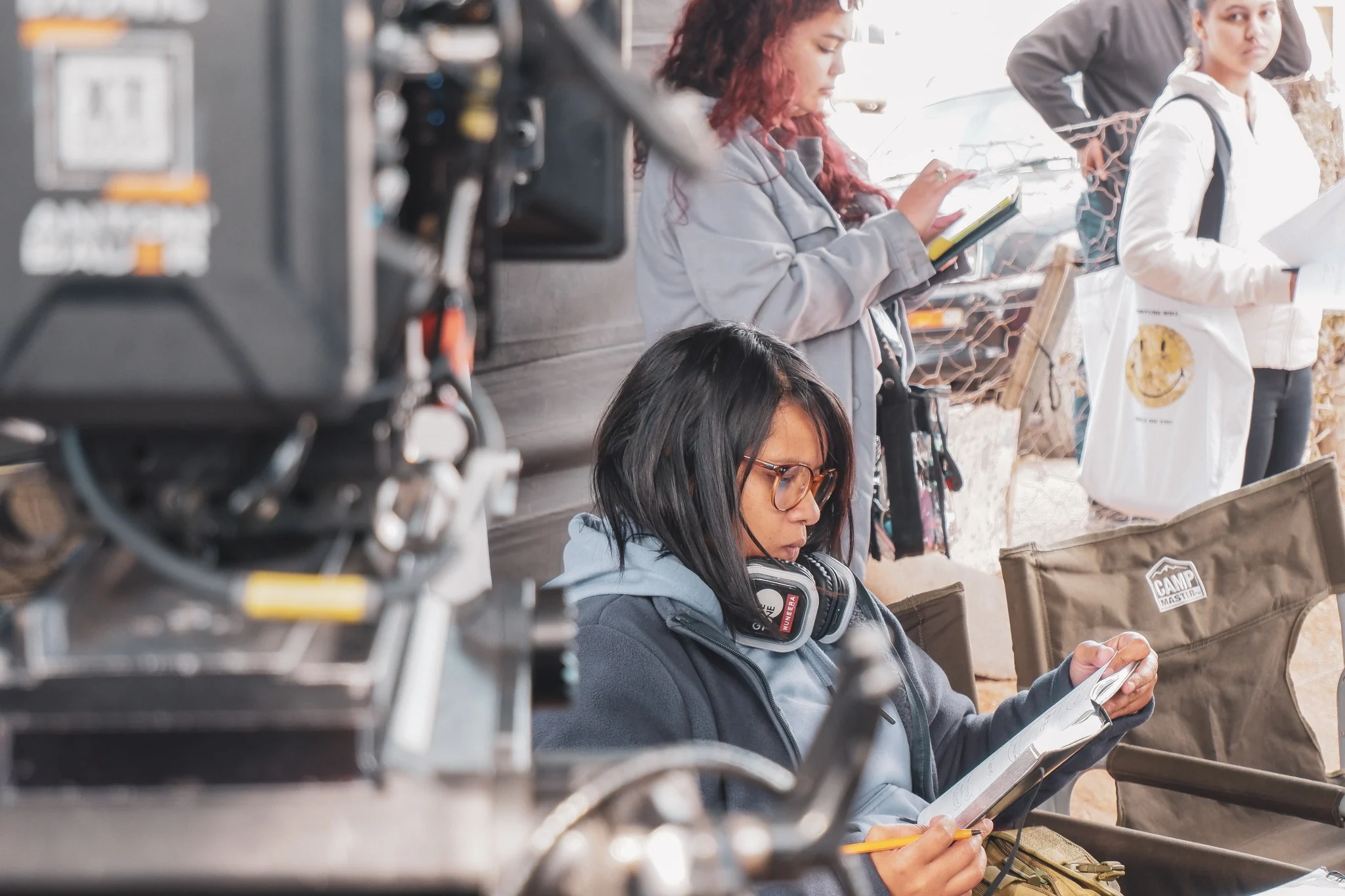
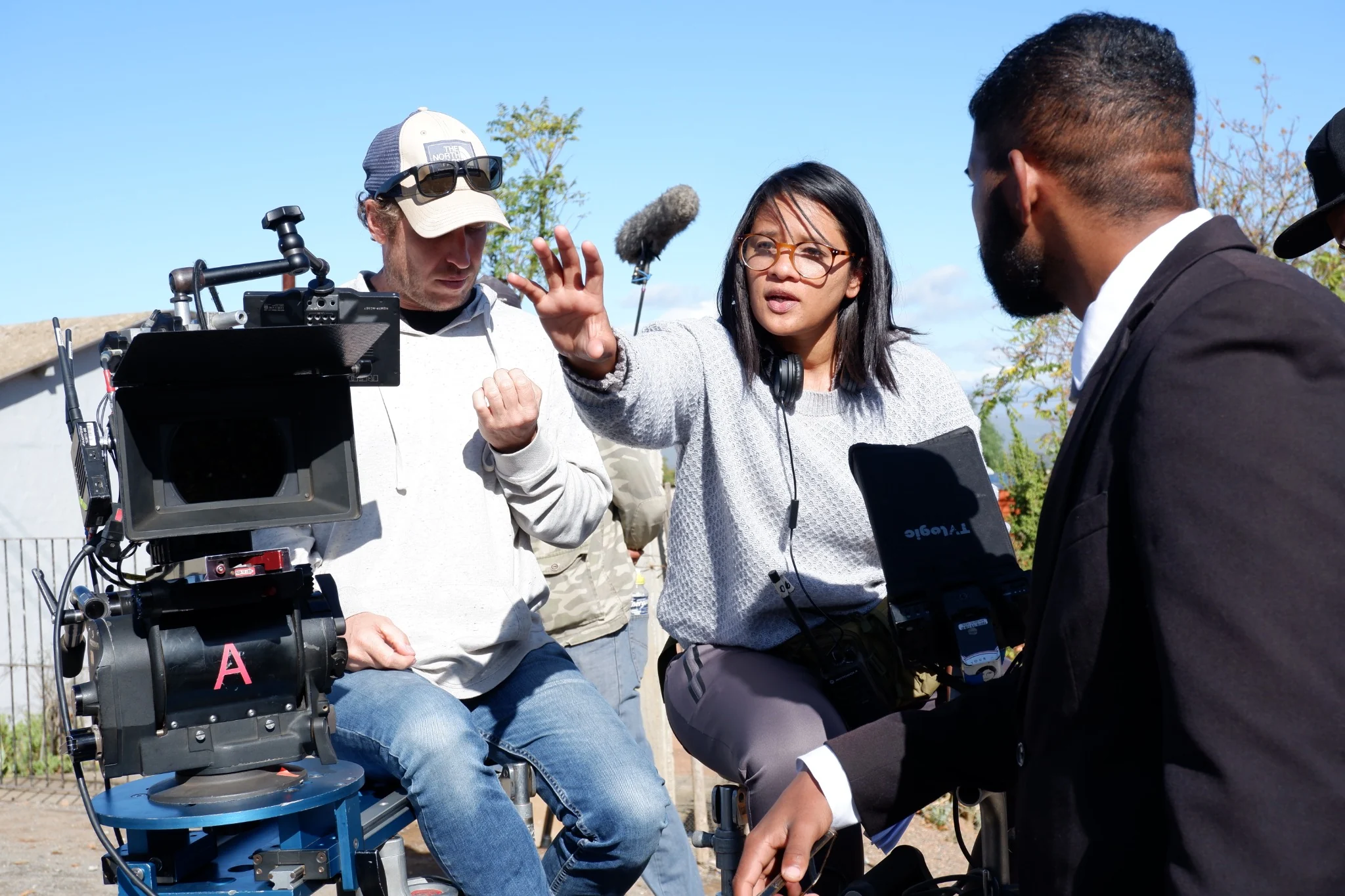
Muneera Sallies reviewing a script beside the cinema camera
Story

Observe before you direct.

Filmmaking taught me that authority begins with attention. You cannot lead a performance, a crew or a story you have not taken the time to understand.

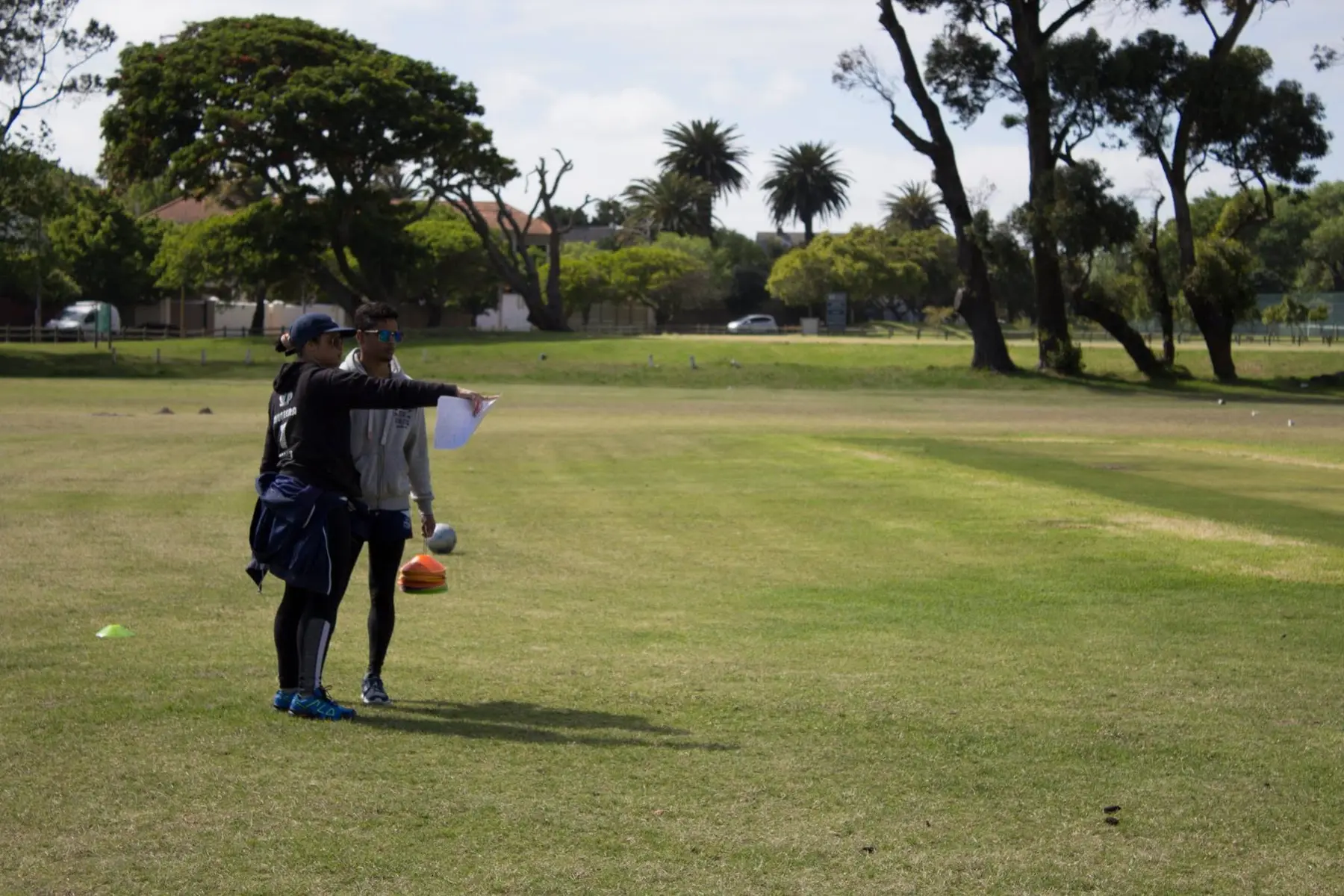
Muneera Sallies coaching on a touch-rugby field
Sport

High standards need a sense of belonging.

Competitive touch rugby taught me preparation, resilience and accountability. It also showed me that people give their best when expectations are clear and they know they matter.

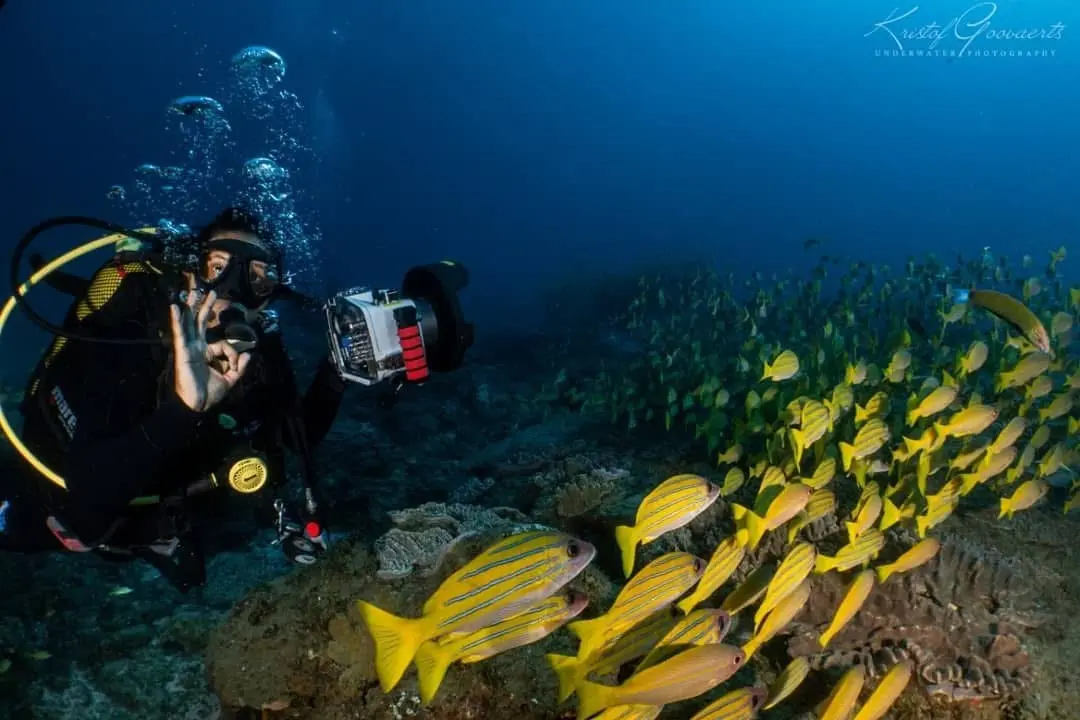
Muneera Sallies underwater with a camera housing beside a school of fish
Ocean

Calm is a practical skill.

Underwater, urgency becomes noise. You plan, communicate, conserve energy and respond to what is actually happening. The same is true in complex creative environments.

The field taught me
what leadership feels like.

Before I coached teams, I learned what it meant to belong to one.

I played touch rugby for many years, captained my club and provincial team, and was selected as a junior player for the senior mixed provincial side. Across three consecutive years, I earned sporting honours including Highest Scorer, Player of the Year and Sportswoman of the Year. More importantly, the sport showed me what talent can become when it meets discipline, trust and opportunity.

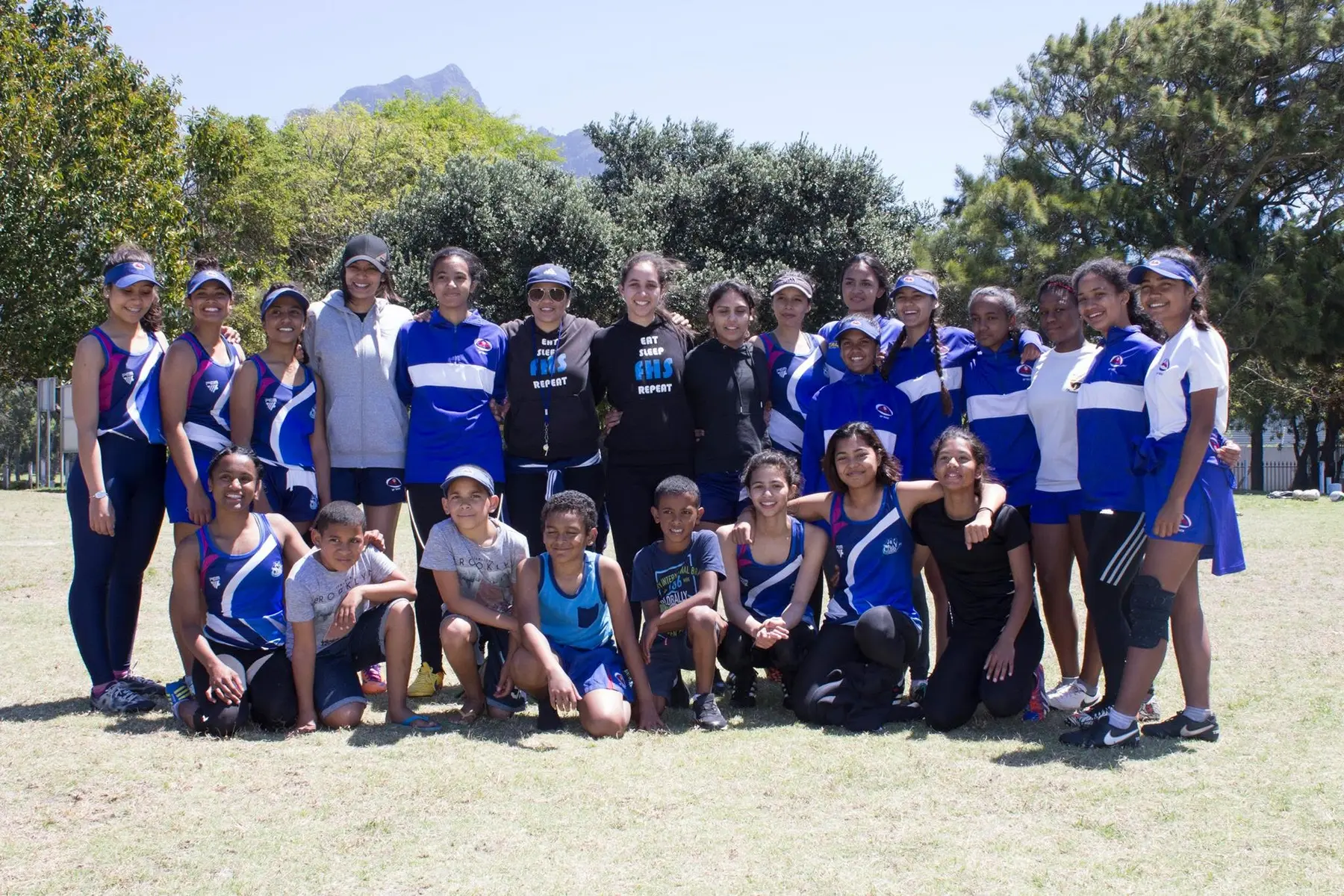
That experience sparked FHS Academy, which I co-founded with my brother Junaid. As Ladies Head Coach, I used sport and media to give young women and boys structure, confidence and a route towards bigger opportunities. I estimate that around 80% of participating players progressed to provincial level.

I later coached the Western Province under-15 and under-17 ladies six-down touch-rugby teams. The setting was different from a film set. The leadership principles were not.

Explore impact & mentorship
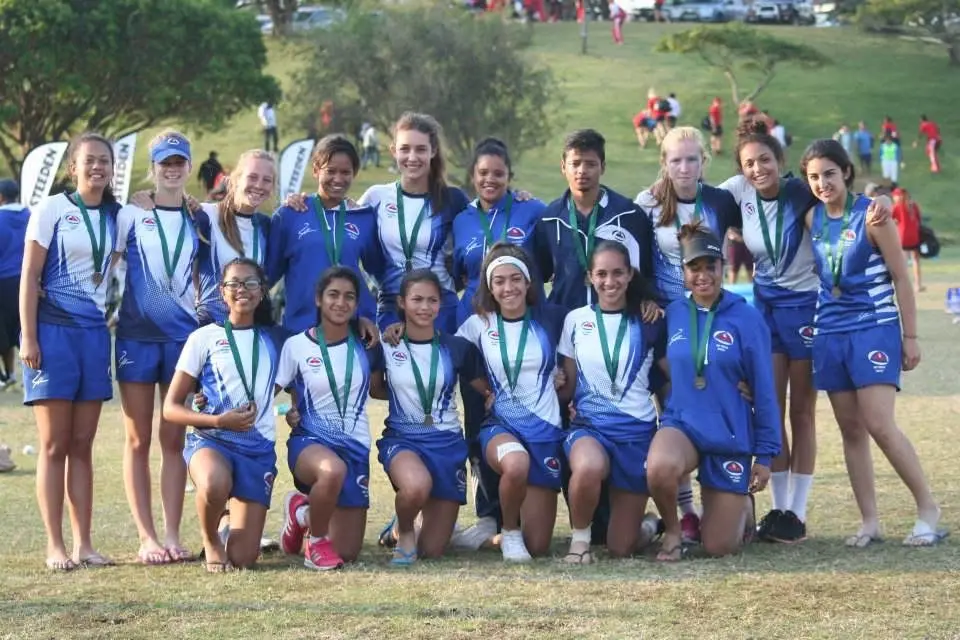
Western Province under-15 girls touch-rugby team with coaching staff
Western Province · U15 girls
FHS Academy players and coaches
FHS Academy · pathways through sport and media

My role kept growing.
So did my perspective.

As my responsibilities grew, I learned how to protect good ideas while managing the realities around them.

01Make

Learn the work from the inside.

Writing, directing, producing and editing taught me how hundreds of decisions become one coherent experience for an audience.

02Build

Create the conditions around the work.

Running productions and leading teams developed my instincts for budgets, schedules, risk, communication and standards under pressure.

03Shape

Look beyond one project.

Commissioning and advisory work taught me to weigh story, audience, commercial reality, cultural value and feasibility together.

04Multiply

Make the pathway wider.

Mentorship, retreats, workshops and initiatives such as Ombura turned experience into practical access for other storytellers.

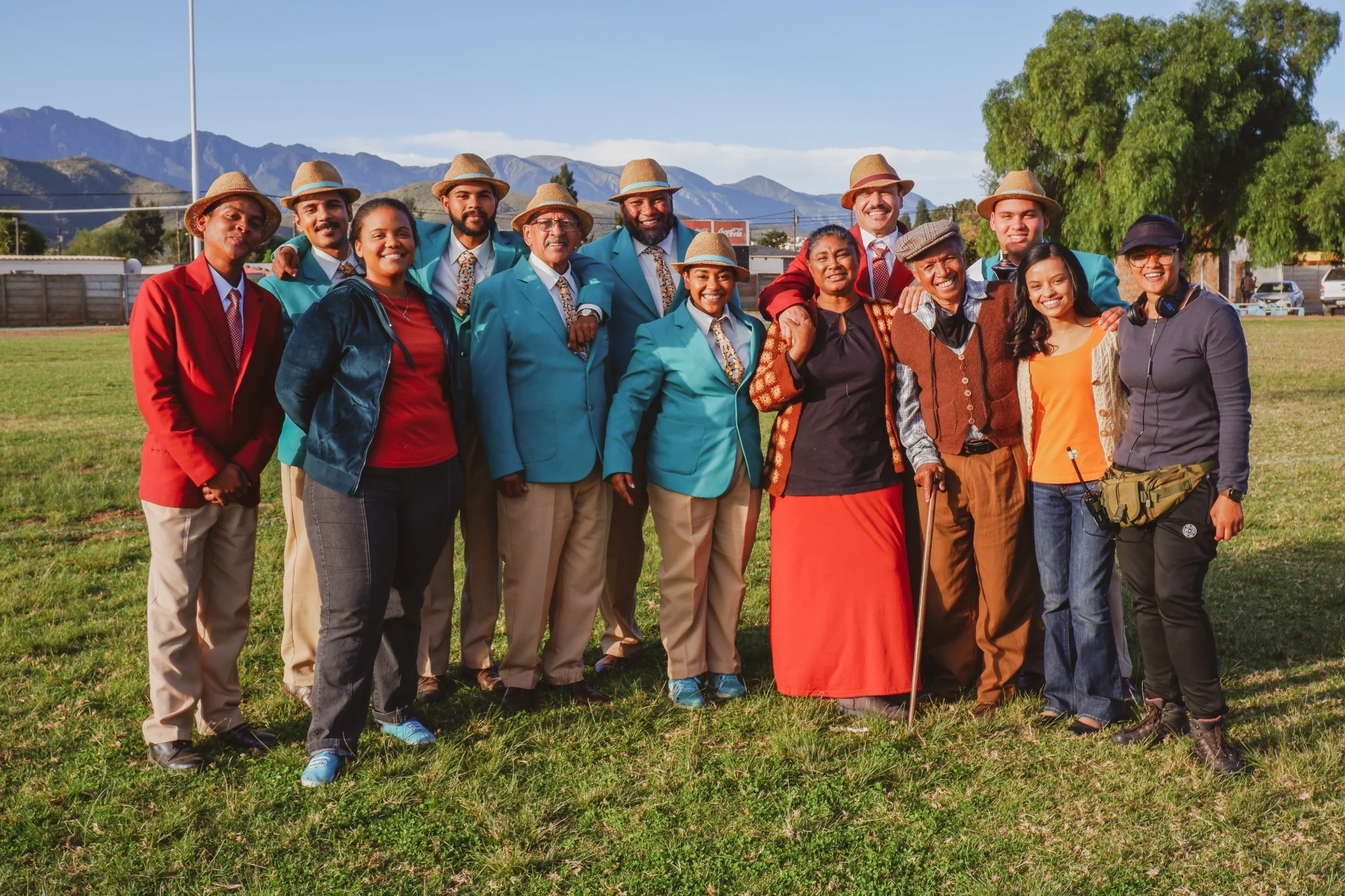
Muneera Sallies with performers from Old Righteous Blues on location
Ambitious work is always collective

The work becomes stronger
when people do too.

Clarity

Say what the work needs, name the real constraint and make the next decision useful.

Care

Respect is not the absence of standards. It is how strong standards become sustainable.

Courage

Choose the specific, honest story, even when the safer version would be easier to explain.

Possibility

Build beyond the individual project: stronger teams, wider pathways and greater creative confidence.

Instinct, strengthened
by discipline.

I have always been drawn to the point where creative judgement meets practical leadership. Formal study gave language and systems to instincts developed across sets, teams and organisations.

AFDA

Bachelor of Arts

Motion Picture Medium and Live Performance · NQF Level 7

Henley Business School

Advanced Diploma

Management Practice · NQF Level 7

European Institute of Leadership

Mini MBA

Business and leadership development

Dive RAID International

Dive Master

Field discipline and underwater filmmaking capability

Muneera Sallies directing a performer beside the cinema camera

The most exciting work asks
for imagination and leadership.

I want to direct stories with cultural and emotional weight, shape ambitious content, lead creative teams and studios, build international partnerships and open real pathways for talent.

I bring a filmmaker’s eye, an executive’s judgement, an athlete’s discipline and the curiosity of someone who is still willing to enter unfamiliar water.